The Hidden Cost of Manual Material Handling
In many factories, warehouses, farms, hotels, and industrial facilities across India, material movement is still heavily dependent on manual labour. Workers push heavy carts, carry loads over long distances, and spend hours transporting materials from one point to another. While this traditional system may appear inexpensive at first glance, the reality is very different.
Manual material handling comes with several hidden costs that directly impact productivity, profitability, worker safety, and operational efficiency.
As industries move toward automation and electric mobility, businesses are beginning to realize that smarter material handling solutions such as electric trolleys can significantly reduce these hidden expenses while improving overall operations.
What Is Manual Material Handling?
Manual material handling refers to the movement, transportation, lifting, loading, or unloading of materials using human effort instead of powered equipment.
Common examples include:
- Pushing heavy hand carts
- Carrying goods manually
- Transporting materials using labour teams
- Pulling loads across factory floors
- Repeated loading and unloading operations
Although this method has been used for decades, it creates operational inefficiencies that are often ignored.
1. High Labour Dependency
One of the biggest hidden costs is excessive dependence on manpower.
In manual systems:
- Multiple workers are required for basic transportation tasks
- Productivity depends entirely on worker availability
- Labour shortages directly affect operations
- Employee absenteeism slows down workflow
With rising labour costs in India, businesses are finding it increasingly difficult to maintain profitability while relying heavily on manual operations.
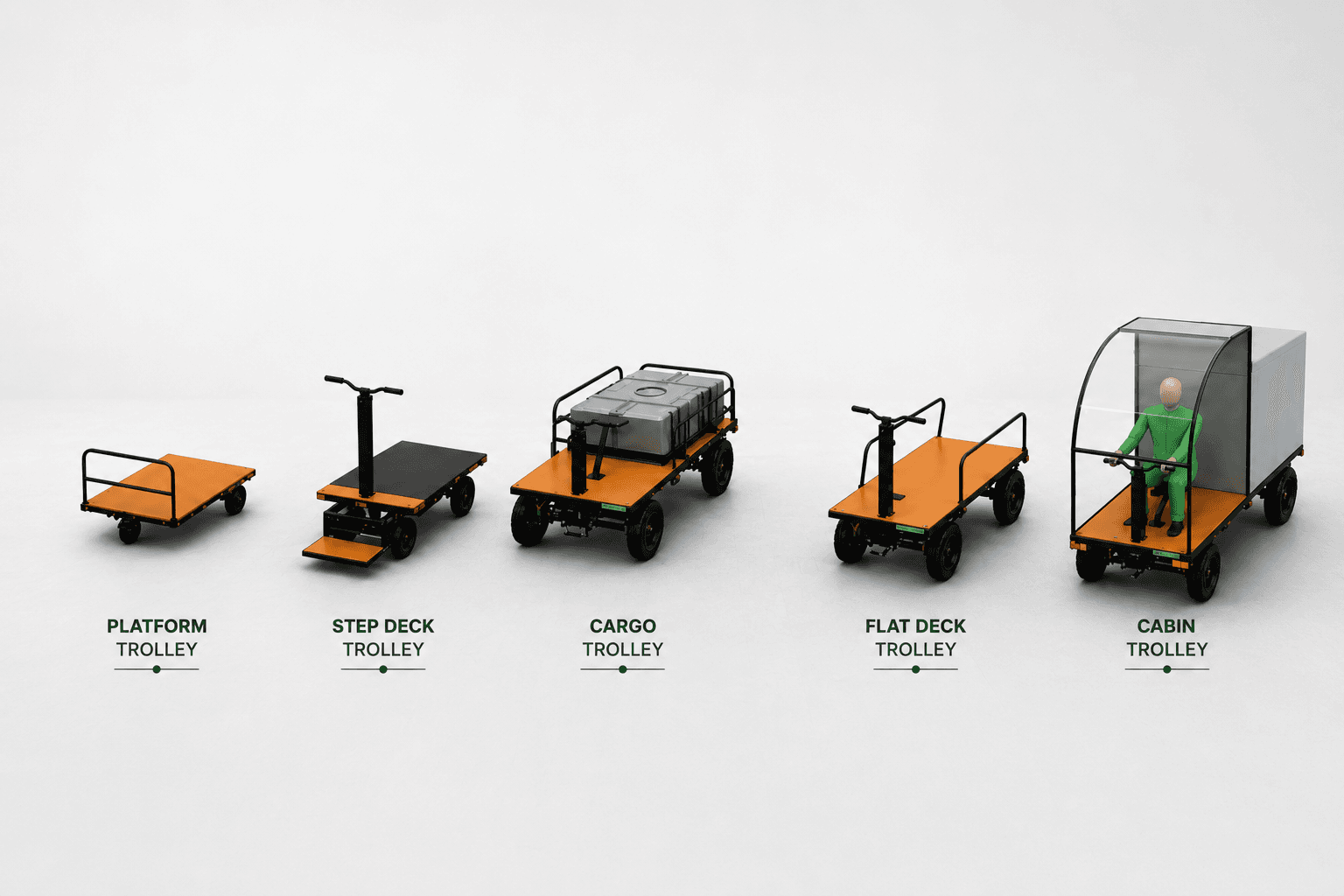
Electric material handling solutions like the MAXGREEN EV Trolley help businesses reduce labour dependency while increasing operational efficiency.
2. Low Productivity and Time Loss
Manual transportation consumes a significant amount of working hours every day.
Workers often spend:
- Long hours transporting materials internally
- Time waiting for loading assistance
- Energy moving repetitive loads manually
This reduces the time available for actual productive work.
For example:
- A worker manually transporting materials may complete only a few trips per hour
- An electric trolley can transport heavier loads faster and more efficiently with minimal physical effort
Over time, these delays lead to lower daily output and reduced operational performance.
3. Worker Fatigue and Reduced Efficiency
Manual handling causes physical exhaustion.
Continuous lifting, pushing, and carrying results in:
- Worker fatigue
- Lower productivity
- Increased breaks
- Slower movement
- Reduced morale
Fatigued workers are naturally less efficient and more prone to errors.
Battery-operated utility trolleys reduce physical strain and allow workers to focus on higher-value tasks rather than repetitive transportation activities.
4. Workplace Injuries and Safety Risks
Manual material handling is one of the leading causes of workplace injuries globally.
Common issues include:
- Back injuries
- Muscle strain
- Slips and falls
- Fatigue-related accidents
- Long-term health problems
Injuries increase:
- Medical expenses
- Compensation costs
- Employee downtime
- Operational disruptions
Modern electric material handling equipment improves workplace safety by minimizing physical exertion and reducing manual lifting requirements.
5. Inefficient Material Flow
In industries where materials must move continuously, delays in internal transportation can affect the entire workflow.
Slow material movement can lead to:
- Production bottlenecks
- Delayed dispatches
- Idle machinery
- Inventory congestion
- Reduced operational coordination
Efficient material flow is critical for modern manufacturing and warehousing operations.
Electric trolleys enable faster, smoother, and more organized transportation inside facilities.
6. Rising Operational Costs
Many businesses assume manual handling is cheaper because there is no machinery investment involved.
However, the long-term costs are much higher when factors like:
- Labour wages
- Worker turnover
- Lost productivity
- Injury costs
- Operational delays
- Fatigue-related inefficiencies
are considered together.
The actual cost of manual handling often exceeds the investment required for efficient electric material handling equipment.
7. Difficulty Scaling Operations
As businesses grow, manual systems become harder to manage.
Higher production volumes require:
- More labour
- More coordination
- More supervision
- More handling time
This creates scalability challenges.
Electric utility vehicles and battery-powered trolleys allow businesses to increase operational capacity without proportionally increasing manpower.
Why Businesses Are Switching to Electric Material Handling
Modern industries are rapidly adopting electric material handling solutions because they offer:
- Lower operating costs
- Reduced labour dependency
- Faster transportation
- Better productivity
- Improved worker safety
- Cleaner and quieter operations
- Eco-friendly performance
- Easy maintenance
Solutions like the MAXGREEN EV Trolley are helping Indian businesses modernize internal transportation while improving efficiency and reducing costs.
The Future of Material Handling Is Electric
The future of industrial transportation is shifting toward smart, efficient, and sustainable solutions.
Businesses that continue relying entirely on manual handling may face:
- Higher operational expenses
- Lower competitiveness
- Labour-related challenges
- Reduced productivity
Electric trolleys are no longer a luxury — they are becoming a practical necessity for modern operations.
Whether it is a warehouse, factory, farm, hospital, hotel, or industrial facility, upgrading material handling systems can significantly improve operational performance.
Conclusion
Manual material handling may seem economical initially, but its hidden costs can silently affect productivity, profitability, safety, and business growth.
Companies that invest in modern electric material handling solutions gain:
- Higher efficiency
- Lower operational costs
- Better workforce utilization
- Safer workplaces
- Faster business scalability
As industries continue embracing automation and electric mobility, electric trolleys are emerging as one of the most practical and cost-effective solutions for internal material movement.
If your business is still dependent on manual transportation methods, now is the right time to rethink material handling for the future.
Industrial mobility expert and clean energy advocate at Maxgreen Mobility. Committed to helping warehouses, factories, and commercial campuses transition to highly efficient, zero-emission transport solutions.
Want to optimize your internal logistics?
Discover how our electric trolleys can save you ₹28,000+ per month in fuel costs while boosting your team's material handling efficiency.